An internal link points to another page on your site
A paragraph about maintenance in a coffee-maker guide can link to a cleaning tutorial. Google recommends contextual links with meaningful text.
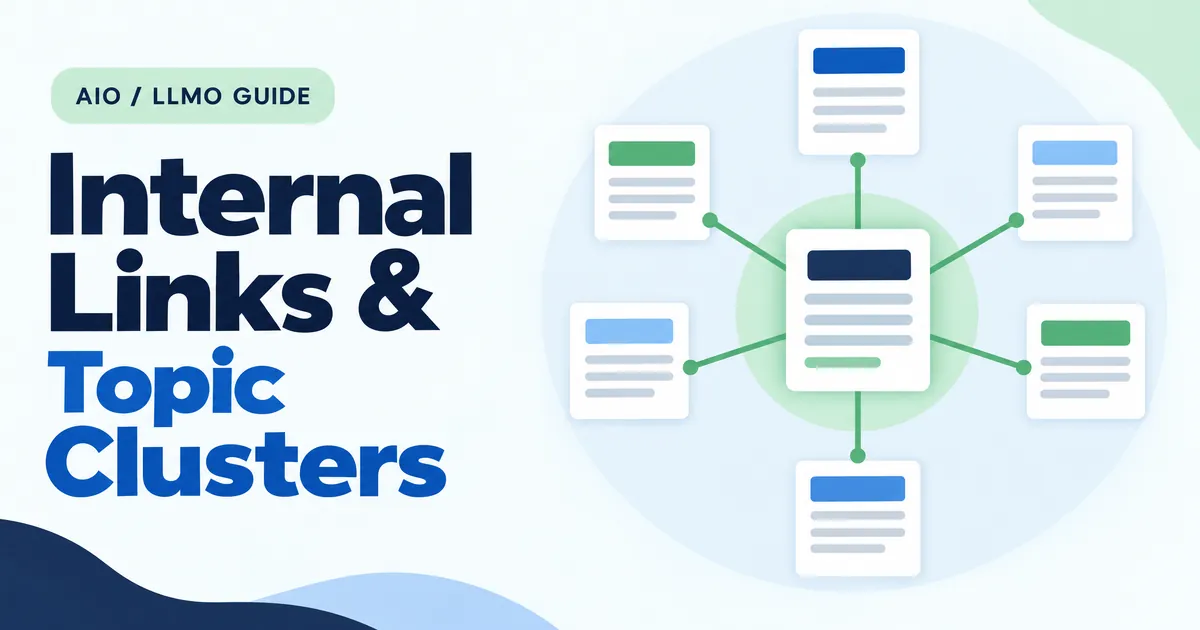
A topic cluster gives related articles distinct roles
A main buying guide can connect with supporting explanations about machine types, maintenance, and placement. This is an illustration, not measured keyword research or actual generated output.
Do not connect everything just to increase link counts
Consider where a reader would benefit from the next explanation. A link should have a reason.
Review overlap and missing questions
Several articles may repeat the same answer while leaving a practical question uncovered. Review the article collection by its intended roles.
How SEOAGENT supports the work
Review a link’s paragraph, wording, destination, and reason before inserting a supported suggestion into the draft. Review and approve topic-group proposals, then inspect missing connections and questions. Approval does not automatically publish links across the site.
Reference: Google’s link best practices. The topic-group example illustrates organization and is not a promise of ranking gains.